Last updated: August 18, 2026
This Privacy Policy transparently describes how appsPride collects, uses, protects, and processes personal data within gChat and its associated ecosystem (including ChatGay.pt), in strict compliance with the General Data Protection Regulation (GDPR - EU Regulation 2016/679) and the Digital Services Act (DSA - EU Regulation 2022/2065).
1. Data Controller and Contact
The data controller is appsPride. For any privacy inquiries, data subject rights, or legal compliance matters, contact our official channel:
Data Protection Officer / Legal Support: gchat@appspride.com
Corporate Website: https://www.appspride.com
2. Data Minimization and Anonymous Access
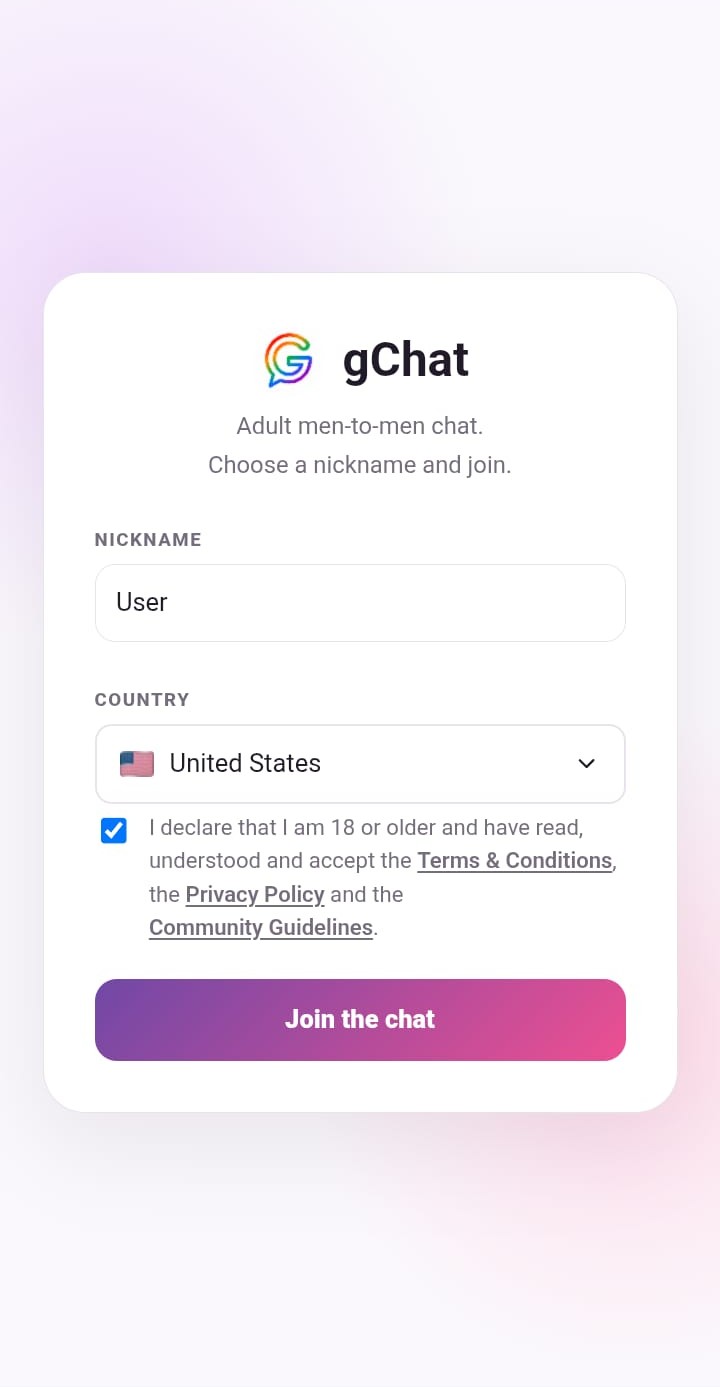
gChat is built on the principle of Privacy by Design and strict data minimization. Standard access is granted by choosing a nickname, without requiring real names, physical addresses, emails, or phone numbers to join public and private chat rooms.
3. Categories of Processed Data
To ensure technical functionality, network integrity, and service delivery, we process only the following categories of data:
Technical & Connection Data: IP addresses (used for routing, DDoS prevention, and security moderation), session IDs, User-Agent strings (browser/device type), and timestamps;
Usage Data: Temporary or registered nickname, room preferences, and interface language;
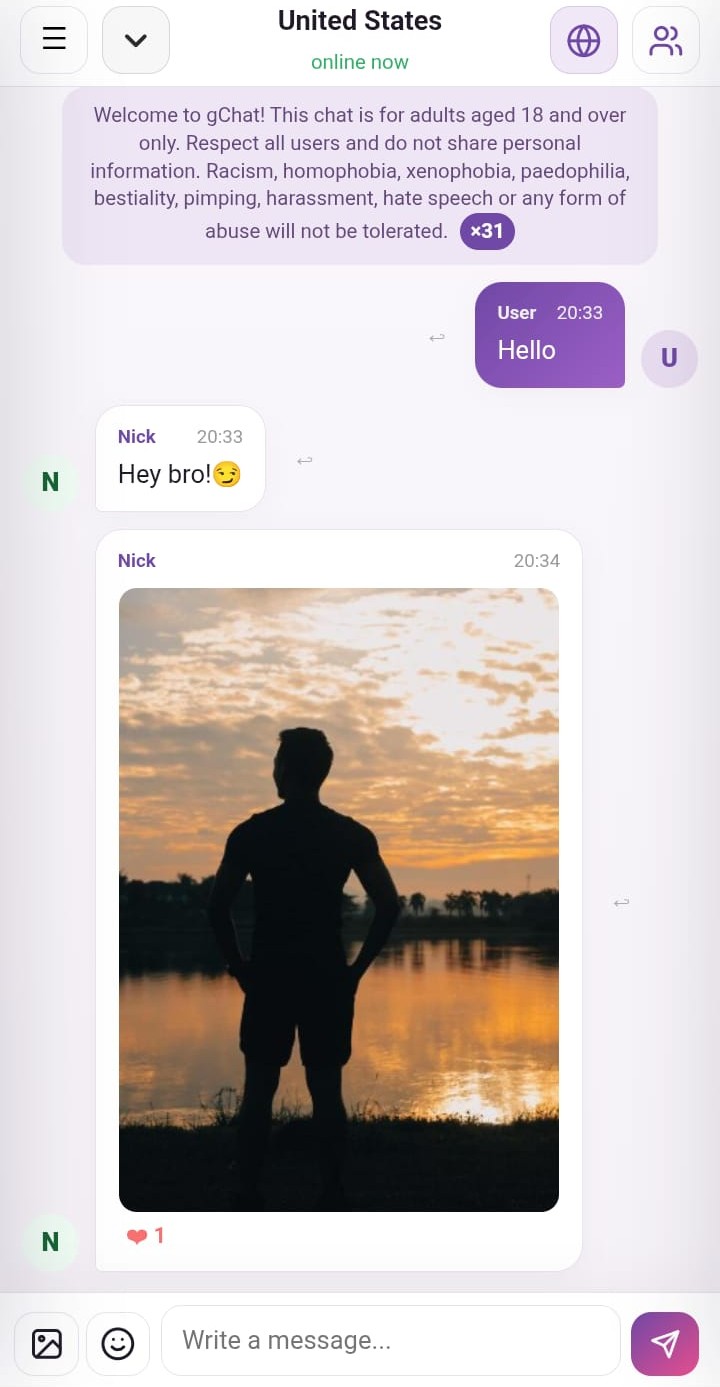
Transient Communications: Text messages, photos, videos, and voice notes voluntarily shared during an active chat session;
Moderation & Safety Data: Report logs, automated safety risk scores, and enforcement history.
4. Special Categories of Data (GDPR Art. 9)
As gChat and ChatGay.pt are community platforms for the LGBTQIA+ community, sharing information concerning sexual orientation or personal intimacy constitutes a special category of personal data under GDPR.
appsPride does not require or request sexual orientation disclosures to use the platform. Any such information shared in chat messages results solely from data manifestly made public by the data subject (under GDPR Article 9(2)(e)) and is treated with heightened privacy safeguards and ephemeral retention.
5. Purposes and Legal Bases for Processing
Personal data is processed pursuant to GDPR Article 6 legal grounds:
Contract Performance (Art. 6(1)(b)): Delivering real-time communications, routing chat messages, and facilitating WebRTC video calls;
Legal Obligations and Legitimate Interests (Art. 6(1)(c) & (f)): Protecting server infrastructure, moderating illegal content, preventing child sexual exploitation (CSAM/CSAE), preventing spam, and complying with lawful judicial orders;
Consent (Art. 6(1)(a)): Non-essential cookies for customized advertising or web analytics.
6. Automated Moderation and AI (appsPride Safe & DSA)
In accordance with EU Digital Services Act (DSA) requirements, gChat uses the appsPride Safe automated moderation engine:
Real-Time Safety Screening: Messages are processed using automated heuristic rules and AI classification models to immediately detect harassment, severe abuse, fraud, and child exploitation.
Right to Human Review: If you believe a moderation action or ban was applied erroneously (false positive), you have the legal right to request a human review by emailing gchat@appspride.com.
7. Real-Time Video Calls and Media
Video calls on gChat operate via peer-to-peer (P2P) WebRTC technology.
appsPride does not record, listen to, or store live video or audio streams between users on its servers. Video communication is transient and terminates immediately when the call ends.
8. Data Retention and Deletion Periods
In accordance with the GDPR storage limitation principle (Art. 5(1)(e)):
Chat Messages and Media: Ephemeral in nature, stored only during active room/session life and purged via automated server cleanup routines;
Moderation Logs & Incident Records: Retained for a standard period of 7 days for safety and anti-abuse verification, after which they are permanently deleted, except when subject to legal hold;
Temporary Bans: Automated moderation bans expire automatically after 1 hour;
Connection Logs: Kept strictly for the minimum time required for operational network security.
9. Data Sharing and Zero Commercial Sale
appsPride does not sell, rent, or commercialize personal data.
Data is shared strictly with essential technical infrastructure sub-processors (hosting/cloud providers bound by confidentiality) and with law enforcement or judicial authorities when legally mandated.
10. Your Rights under GDPR
Under GDPR Articles 15–22, you have the right to access, rectify, erase ("right to be forgotten"), restrict, and object to the processing of your data, as well as the right to lodge a complaint with a competent Data Protection Authority (in Portugal, CNPD — www.cnpd.pt).
To exercise your rights, email gchat@appspride.com.